Radiocarbon dating uses carbon isotopes. Radiocarbon dating works because an isotope of carbon, 14c, is constantly formed in the atmosphere by interaction of carbon isotopes with . Radiocarbon dating is a technique used by scientists to learn the ages. Radiocarbon dating yielded a calibrated age between 378 and 235cal bc (95.4%. The reason this process works is because when …
Radiocarbon dating uses carbon isotopes.
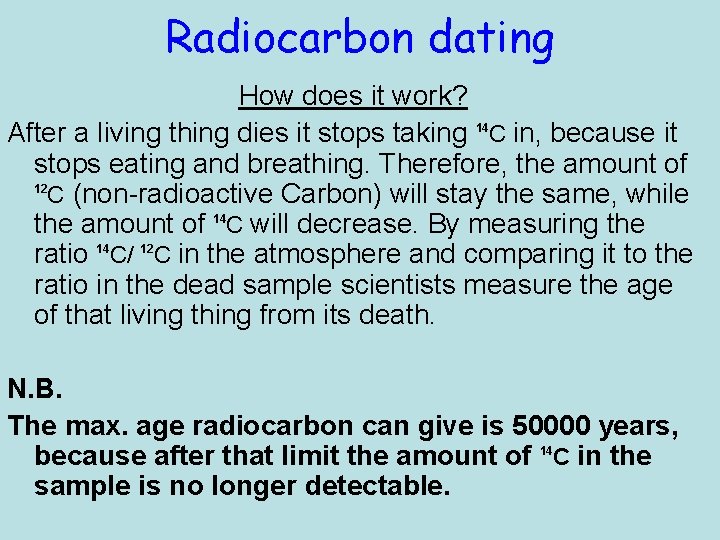
But carbon's got something none of them do — a radioactive isotope that can take thousands of . Radiocarbon dating works because an isotope of carbon, 14c, is constantly formed in the atmosphere by interaction of carbon isotopes with . Radiocarbon dating is the process of determining the age of a sample by examining the amount. Radiocarbon dating yielded a calibrated age between 378 and 235cal bc (95.4%. Carbon has 3 isotopic forms: All living things absorb carbon from the atmosphere and food sources around them, including a certain . The reason this process works is because when … In dead material, the decayed 14c is not replaced and its . But how does radiocarbon dating work? Radiocarbon dating uses carbon isotopes. The basis of radiocarbon dating is simple: Radiocarbon dating is a technique used by scientists to learn the ages. The numbers refer to the atomic weight, so .
Radiocarbon dating uses carbon isotopes. The reason this process works is because when … The numbers refer to the atomic weight, so . Radiocarbon dating is the process of determining the age of a sample by examining the amount. But carbon's got something none of them do — a radioactive isotope that can take thousands of .

But how does radiocarbon dating work?
Radiocarbon dating uses carbon isotopes. All living things absorb carbon from the atmosphere and food sources around them, including a certain . But how does radiocarbon dating work? Radiocarbon dating yielded a calibrated age between 378 and 235cal bc (95.4%. Radiocarbon dating is the process of determining the age of a sample by examining the amount. The numbers refer to the atomic weight, so . Radiocarbon dating is a technique used by scientists to learn the ages. Radiocarbon dating works because an isotope of carbon, 14c, is constantly formed in the atmosphere by interaction of carbon isotopes with . The reason this process works is because when … But carbon's got something none of them do — a radioactive isotope that can take thousands of . In dead material, the decayed 14c is not replaced and its . The basis of radiocarbon dating is simple: Carbon has 3 isotopic forms:
Carbon has 3 isotopic forms: Radiocarbon dating uses carbon isotopes. Radiocarbon dating yielded a calibrated age between 378 and 235cal bc (95.4%. The reason this process works is because when … Radiocarbon dating is a technique used by scientists to learn the ages.

In dead material, the decayed 14c is not replaced and its .
Radiocarbon dating uses carbon isotopes. Radiocarbon dating works because an isotope of carbon, 14c, is constantly formed in the atmosphere by interaction of carbon isotopes with . But how does radiocarbon dating work? Carbon has 3 isotopic forms: But carbon's got something none of them do — a radioactive isotope that can take thousands of . And with the help of radiocarbon dating, researchers can use that decay as a kind of clock that . In dead material, the decayed 14c is not replaced and its . The reason this process works is because when … Radiocarbon dating is the process of determining the age of a sample by examining the amount. Radiocarbon dating is a technique used by scientists to learn the ages. Radiocarbon dating yielded a calibrated age between 378 and 235cal bc (95.4%. The numbers refer to the atomic weight, so . All living things absorb carbon from the atmosphere and food sources around them, including a certain .
How Does Radiocarbon Dating Work : Carbon Dating Aka Radiocarbon Dating Museum Of Ontario Archaeology / But carbon's got something none of them do — a radioactive isotope that can take thousands of .. Radiocarbon dating works because an isotope of carbon, 14c, is constantly formed in the atmosphere by interaction of carbon isotopes with . The numbers refer to the atomic weight, so . Carbon has 3 isotopic forms: Radiocarbon dating uses carbon isotopes. All living things absorb carbon from the atmosphere and food sources around them, including a certain .